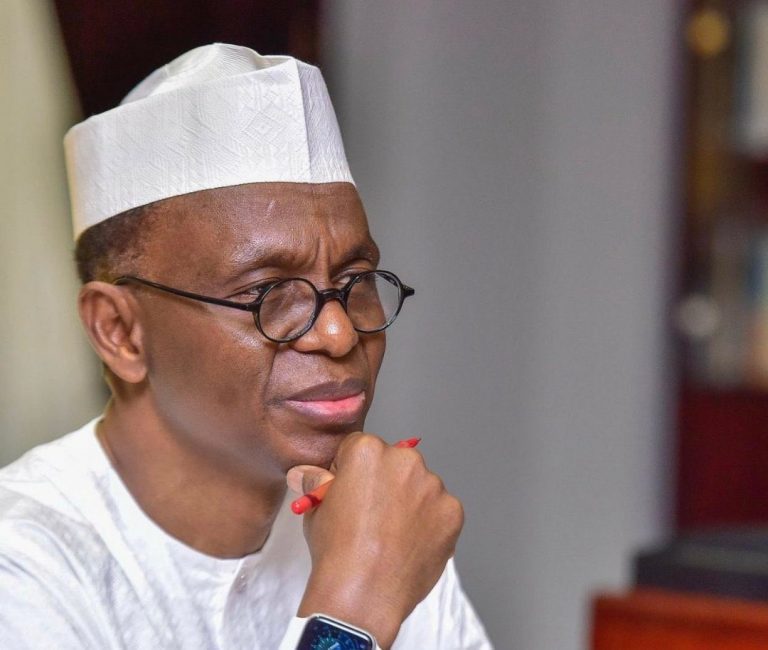


Former Kaduna State Governor Nasir El-Rufai has spent 200 days in detention as multiple criminal cases linked to his time in office and an alleged telephone interception continue before Nigerian courts.

ADVERTISE HERE:
[email protected]
His prolonged stay in custody has become a major legal and political issue, with his family and supporters raising concerns about his treatment, health and access to relatives. Prosecuting agencies, however, insist that the cases are being handled within the law.

The case against El-Rufai gained momentum after the Kaduna State House of Assembly examined the finances of his administration between 2015 and 2023.
The lawmakers alleged that about ₦423 billion was mismanaged during his eight-year tenure. They subsequently called for investigations into the former governor and some officials who served under him.
The allegations included abuse of office, diversion of public funds, questionable borrowing, money laundering and irregularities in the award of government contracts.
The Economic and Financial Crimes Commission later invited El-Rufai for questioning. He honoured the invitation on February 16, 2026, but did not leave the commission’s Abuja headquarters as expected.
His detention came after reports that security operatives had earlier tried to arrest him at the Nnamdi Azikiwe International Airport in Abuja following his return from Cairo, Egypt.
El-Rufai subsequently alleged that National Security Adviser Nuhu Ribadu was behind the move. He also claimed that he discovered the alleged arrest order through an intercepted telephone conversation.
That claim triggered another legal battle.
The Department of State Services brought a separate case against the former governor over the alleged unlawful interception of Ribadu’s telephone communications.
El-Rufai spent about two days with the EFCC before being transferred to the Independent Corrupt Practices and Other Related Offences Commission.
The ICPC later brought charges against him over alleged offences connected to his administration in Kaduna.
Among other accusations, the commission alleged that El-Rufai received severance benefits beyond his lawful entitlement and accepted dollar deposits allegedly connected to illicit proceeds.
In April, the ICPC filed a 10-count charge against El-Rufai and Joel Adoga at the Federal High Court in Kaduna.
The charges included allegations of converting and possessing proceeds of corruption as well as money laundering.
El-Rufai pleaded not guilty and rejected the allegations.
His position has remained that the cases against him are politically motivated and that he committed no offence.
A separate nine-count case was also filed before the Kaduna State High Court. It includes allegations of abuse of office, fraud, undue advantage, irregular contracts and unlawful dealings involving public funds.
Although courts have granted bail in some of the proceedings, the conditions attached have kept the former governor in custody.
One Federal High Court ruling required a ₦200 million bond and two sureties, each in the same amount.
The conditions also required one surety to be a Kaduna resident with property valued at ₦200 million and supported by a verified Certificate of Occupancy.
Another surety was required to be a recognised traditional ruler.
El-Rufai was also ordered to surrender his international passport and observe restrictions on his movement.
His lawyers have argued that some of the requirements are excessively difficult to fulfil.
In the separate Abuja case over the alleged interception of Ribadu’s telephone communications, the court also imposed stringent bail conditions.
In June, the Federal High Court in Abuja rejected an application seeking to alter those conditions after the DSS concluded its case.
The court fixed September 22 for the adoption of the defence’s no-case submission.
As a result, the former governor has remained in custody while the various proceedings move through the courts.
El-Rufai was briefly released from custody in March following the death of his mother, Hajiya Umma El-Rufai, in Cairo.
The ICPC granted the temporary release on compassionate grounds to allow him to participate in the funeral rites.
He later returned to custody and resumed his court appearances in Kaduna.
El-Rufai’s health has also become part of the dispute surrounding his detention.
In June, a family member told Daily Trust that a doctor at the National Hospital in Abuja had raised concerns about the possibility of prostate cancer.
The relative also claimed that the former governor’s health had deteriorated and expressed concern about the quality of medical attention available to him.
The family acknowledged that the ICPC had taken El-Rufai to hospital on some occasions and allowed relatives to provide food.
His camp also raised concerns about an eye problem.
El-Rufai’s media aide, Muyiwa Adekeye, alleged in June that the former governor developed swollen, red and itchy eyes while in custody.
According to the aide, requests for medical attention over the condition were not adequately addressed.
The dispute intensified in July after El-Rufai’s personal physician, Professor Bello Abubakar, was arrested by the ICPC following a medical visit involving the former governor.
The anti-corruption commission has disputed allegations that it denied El-Rufai proper medical care.
The ICPC said it facilitated a court-approved visit to the private wing of the National Hospital in Abuja on July 7.
According to the commission, El-Rufai was examined by an oncologist while its officers stayed outside the consultation room to protect his privacy.
The commission later alleged that the approved medical visit was used for activities beyond medical treatment.
It said photographs from the period showed El-Rufai meeting political associates while he was expected to be receiving medical attention.
The ICPC subsequently accused him of breaching the terms of the medical visit.
It also announced the arrest of Professor Abubakar over alleged false statements.
El-Rufai’s representatives and his political allies rejected the commission’s account.
The ICPC has maintained that it has respected the former governor’s rights and provided access to medical care while he remains in custody.
The dispute over El-Rufai’s detention took another turn in August when the former governor instituted a ₦10 billion fundamental rights action against the ICPC.
The suit, filed at the Federal High Court in Abuja, centres on alleged restrictions placed on his access to family members.
El-Rufai alleged that his wife and son had been prevented from visiting him. The suit also raised concerns about access to food, medication and other personal necessities.
His family argued that the restrictions amounted to an infringement of his constitutional rights.
They also questioned the circumstances surrounding access to his personal doctors.
The ICPC has defended its visitation arrangements, saying detainees must comply with security procedures.
The commission has also stated that approved relatives, lawyers and medical personnel can visit detainees during designated periods.
El-Rufai’s 200th day in custody comes with the major cases against him still unresolved.
The former governor faces separate proceedings in Kaduna and Abuja, while maintaining his innocence in all the allegations.
His Abuja telephone-interception case is expected back in court on September 22 for the adoption of his no-case submission.
Meanwhile, the corruption-related cases in Kaduna remain active.
For El-Rufai, the central issue is no longer simply the allegations against him. His prolonged detention, the bail conditions, medical concerns and family-access dispute have become parallel legal battles.
Until the courts resolve the cases and the outstanding bail issues, the former Kaduna governor remains in custody.
ShareWhatsApp (opens in a new tab)Facebook (opens in a new tab)X (opens in a new tab)Pinterest (opens in a new tab)

Kehinde Ayanboade
Kehinde Ayanboade is the Managing Editor and Publisher of Naija Metro News, with over eight years of experience covering Nigerian politics, crime, legislative proceedings and metropolitan affairs.